
BLOSSOM² CAPABILITIES
RESEARCH TMS PRODUCTS
Blossom² TMS
The AI-Ready Platform for
Advanced Neuroscience Research.
Designed for Discovery.
Engineered for Innovation.
Built for the Future of Programming Neuroplasticity.
Blossom² is our next-generation TMS research platform, currently available for Research Use Only (RUO). It is investigational and not approved or cleared for clinical use.
AI-READY ARCHITECTURE
Built for integration with AI algorithms, external sensors, and multimodal neuromodulation workflows.
NEUROPLASTICITY RESEARCH
Exploring new ways to shape neuroplasticity through advanced stimulation paradigms.
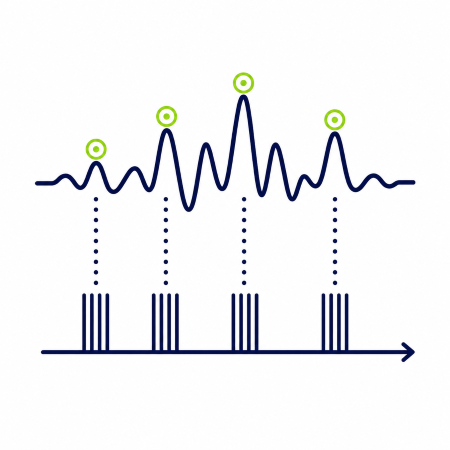
ADAPTIVE TIMING & PATTERNS
Precise control over timing, frequency, and stimulation patterns.
FINGERPRINT TMS
Stimulation tailored to the brain’s intrinsic neurophysiological signature.
CLOSED-LOOP TMS
Designed for real-time feedback and closed-loop stimulation strategies.
ULTRA-FAST STIMULATION
Advanced stimulation pattern with burst frequencies up to 1000 Hz, following intrinsic temporal dynamics.
All Pulse Patterns.
Blossom² supports the full spectrum of established and emerging stimulation paradigms, enabling researchers to explore, adapt, and innovate without limits.
Single Pulse

Single pulse for mapping and basic neurophysiolgical studies.
Paired Pulse

Two pulses at defined intervals to study cortical excitability.
rTMS
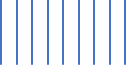
Repetitive pulses at fixed frequency for cortical modulation studies.
Theta Burst (TBS)

Burst stimulation in theta frequency (5Hz) as iTBS, cTBS or imTBS
Alpha Burst
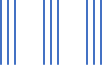
Alpha-burst frequency (10Hz) for targeted neuromodulation.
Beta Burst

Beta frequency bursts (20Hz) to investigate beta-band neurodynamics.
QPS

Quadri-pulse stimulation for exploring neuroplasticity effects.
qTBS

Combining QPS with theta bursts for potential neuroplasticity protocols.
iQPS

Individualized quadri-pulse stimulation synchronized to I-wave timing.
iqTBS
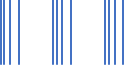
I-wave synchronized QPS theta bursts exploring programmable, long-lasting neuroplasticity effects – Fingerprint TMSTM
AI Mode
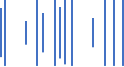
AI-driven adaptive stimulation that adjusts in real time.
Custom Protocols
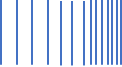
Create and save user-defined protocols with full flexibility.
FINGERPRINT TMSTM
Stimulation Guided by the Brain`s Own Timing.
Every brain has its own rythm.
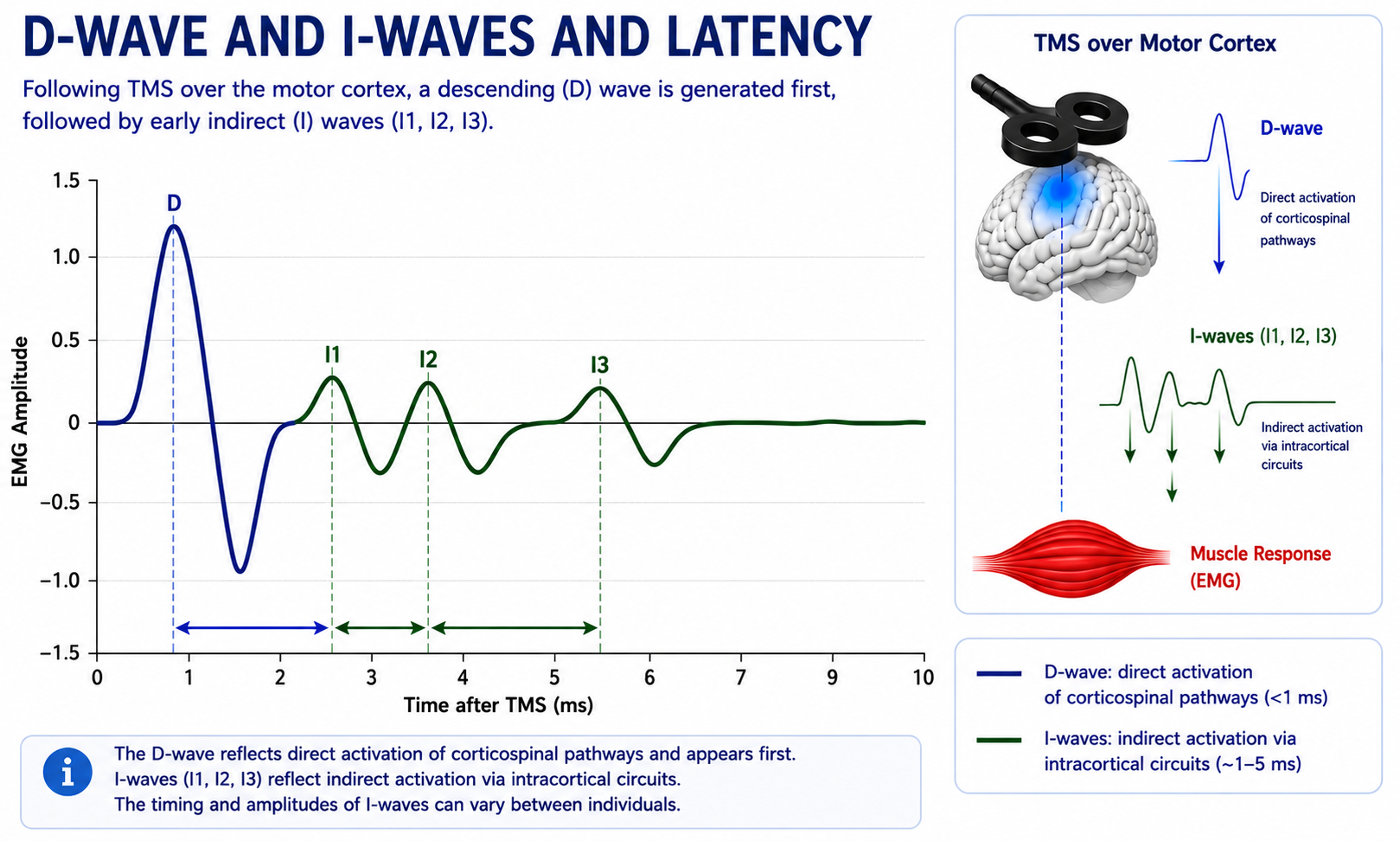
The timing of cortical I-waves varies between individuals and represents a unique neurophysiological fingerprint. Blossom² is designed to utilize these individualized timing characteristics by delivering advanced stimulation protocols such as iqTBS that can be precisely synchronized to the measured I-wave intervals.
Research indicates that stimulation delivered at specific I-wave latencies may facilitate more consistent and durable neuroplastic changes +. Fingerprint TMS™ therefore explores a personalized stimulation approach that aligns neural stimulation with the intrinsic temporal dynamics of the brain.
By combining individualized timing with programmable stimulation paradigms, Blossom² enables researchers to investigate how precisely timed stimulation may contribute to programming neuroplasticity effects. The platform is designed to explore adaptive stimulation strategies that may help shape, optimize, and better understand long-lasting neuroplastic changes through personalized brain stimulation.
Blossom² — From Neuromodulation to Programmable Neuroplasticity Research.
BLOSSOM² TMS
TECHNICAL PARAMETER
rTMS
up to 100 Hz
Repetitive Transcranial Magnetic Stimulation with frequencies up to 100 Hz.
PAIRED PULSE
S1/S2 ≥ 1 ms
Interstimulus interval between
S1 & S2 ≥ 1 ms with adjustable intensity jumps.
BURST RATE
Theta Burst (5 Hz)
Alpha Burst (10 Hz)
Beta Burst (20 Hz)
Selectable burst rates for different neuromodulation paradigms.
BURST FREQUENCY
10 – 100 Hz,
individually adjustable
Burst frequency freely adjustable
from 10 Hz to 100 Hz.
QPS
Sub-Millisecond Burst Timing
Quadri-Pulse Stimulation with freely adjustable burst timing at 100 µs resolution.
iQPS
Individualized I-Wave Timing
Freely adjustable I-Wave intervals with ultra-fine 100 µs resolution.
QPS BURSTS
up to 1000 Hz
Maximum burst frequency
for QPS protocols
1,000 Hz
BEYOND STANDARD PROTOCOLS
From Fixed Protocols to
Adaptive Neuroplasticity
Blossom² expands TMS from fixed stimulation paradigms to adaptive, programmable neuromodulation concepts.
STANDARD TMS
Fixed Protocols
Static Timing
Limited Protocol Selection
Generic Stimulation
Predefined Sequences
Standard Modulation
Separate Systems for Advanced Paradigms
Limited Extensibility
EXAMPLE:
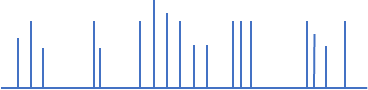
REPETITIVE STIMULATION

EXAMPLE:
BURSTS

EXAMPLE:
CUSTOM PATTERN

BLOSSOM² TMS
Adaptive Stimulation Concepts
Precision Timing Technologies
Programmable Burst Structures
Personalized Stimulation Research
Dynamic Pattern Generation
Neuroplasticity-Focused Research
Unified Multi-Paradigm Platform
AI-ready Architecture
EXAMPLE:
REPETITIVE STIMULATION

EXAMPLE:
BURSTS

EXAMPLE:
CUSTOM PATTERN
GERMANY
SEBERS Medical GmbH
Seidlstrasse 30
80335 Munich
Germany
+49 89 4134 0754
kontakt@sebersmedical.com
USA
SEBERS Medical Inc.
230 S Broad Street, 17th Fl
Philadelphia, PA 19102
USA
+1-833-3289-867
contact@sebersmedical.com
LEGAL
Imprint
Privacy Policy
© 2026 SEBERS Medical. All rights reserved.
Technology from Science – Engineered for the Patient
+Resources:
Hamada, M., & Ugawa, Y. (2020) Quadripulse stimulation (QPS). Exp Brain Res 238, 1619–1625. https://doi.org/10.1007/s00221-020-05788-w
Ziemann U. I-waves in motor cortex revisited. Experimental Brain Research. 2020;238:1601–1610. https://doi.org/10.1007/s00221-020-05764-4
Jung NH, Gleich B, Gattinger N, Hoess C, Haug C, et al. (2016) Quadri-Pulse Theta Burst Stimulation using Ultra-High Frequency Bursts – A New Protocol to Induce Changes in Cortico-Spinal Excitability in Human Motor Cortex. PLOS ONE 11(12): e0168410. https://doi.org/10.1371/journal.pone.0168410
Volz, L. J., Hamada, M., Michely, J., Pool, E. M., Nettekoven, C., Rothwell, J. C., & Grefkes Hermann, C. (2019). Modulation of I-wave generating pathways by theta-burst stimulation: a model of plasticity induction. The Journal of physiology, 597(24), 5963–5971. https://doi.org/10.1113/JP278636
Kidgell DJ, Mason J, Frazer A, Pearce AJ. I-wave periodicity transcranial magnetic stimulation (iTMS) on corticospinal excitability: A systematic review of the literature. Neuroscience. 2016;322:262–272. https://doi.org/10.1016/j.neuroscience.2016.02.041
Sewerin, S., Taubert, M., Vollmann, H., Conde, V., Villringer, A., & Ragert, P. (2011). Enhancing the effect of repetitive I-wave paired-pulse TMS (iTMS) by adjusting for the individual I-wave periodicity. BMC neuroscience, 12, 45. https://doi.org/10.1186/1471-2202-12-45
Conference Abstract: Schaff F, Brich L, Sautter K, et al. Changes in cortico-spinal excitability by individualized quadri-pulse theta burst stimulation. Brain Stimulation. 2023;16(1):398. https://doi.org/10.1016/j.brs.2023.01.804

